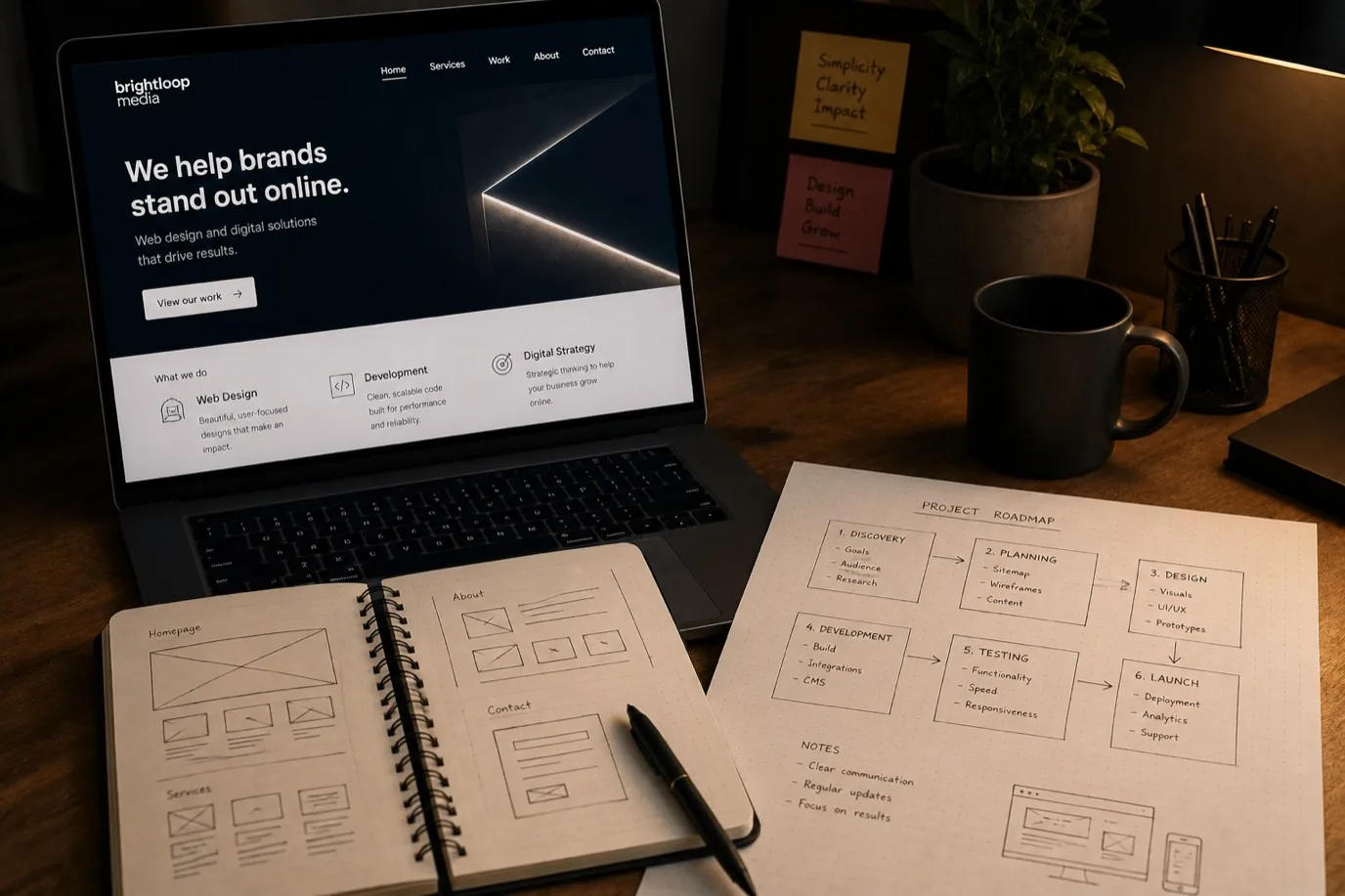
When you're buying a website, the timeline matters. How long should it actually take? When should you expect to launch? Is your designer being realistic or just slow? The answer depends on scope, how fast you can provide feedback, and the designer's workflow. Most small business websites take between six to twelve weeks from discovery to launch. But that number hides a lot of variation. Understanding what drives timeline helps you plan realistically and spot when something's off.
What goes into a website timeline
A website doesn't magically exist. There are distinct phases, each takes time, and they mostly can't overlap. Discovery means learning about your business, goals, and competition. This might take a few weeks, especially if you're busy and can only answer questions in batches.
Design is next. A designer creates wireframes to outline layout and flow, shares them with you for feedback, refines them, then moves to visual design. This takes weeks. Polished designs that people actually like usually require multiple rounds of feedback and revision. Rushing this phase creates problems downstream.
Content is parallel to design but separate. You need copy for each page, images or videos, testimonials or case studies. If you're writing the copy yourself, this is where many projects get stuck. Content takes longer than expected because it requires thinking and iteration. A designer can't do much without it.
Development is where design becomes a working website. This is building it in code or on a platform, integrating features like contact forms or payment systems, testing on different devices, making sure it's fast and secure. This phase often reveals things that need refinement. Small issues in design become bigger problems in development. A skilled developer catches and fixes these, but it takes time.
Then there's testing, client review, revisions, and final polish. Something always needs tweaking. A form doesn't quite work. Text looks odd on mobile. A link goes the wrong place. These final details take time but matter enormously.
A realistic timeline breakdown
For a typical small business website with five to eight pages, realistic timings look like this. Discovery and strategy: one to three weeks, depending on how fast you can provide information. Design and wireframes: two to three weeks. Client feedback and revision: one to two weeks. Visual design: two to three weeks. Content gathering and writing: two to four weeks. This is often the bottleneck. Development: three to four weeks. Testing and revision: one to two weeks. Final polish and launch: one week.
Add these together and you're looking at twelve to twenty-two weeks in ideal circumstances. Most real projects cluster around twelve to sixteen weeks. That's three to four months. If someone promises to build your site in four weeks, they're either building something very simple or they're going to cut corners.
The timeline varies by scope. A simple five-page information site is faster than a site with an e-commerce store, booking system, or complex integrations. A site that needs custom features takes longer than one using standard templates.
What slows things down
In reality, most projects take longer than the base timeline suggests. Here's why. Feedback takes longer than expected. You say you'll review designs by Friday. Life happens. It's Tuesday before you get around to it. That's a week of the designer waiting.
Content is the biggest variable. Many business owners underestimate how long it takes to write good copy about their services. They expect it to take a few hours. It usually takes days or weeks. Sourcing images slows things too. Do you have professional photos of your business, products, or team? If not, you need to arrange a shoot or buy stock photos. This adds weeks.
Feedback loops slow things further. You see design version one and have comments. Designer revises. You review again and have more comments. This happens multiple times, and each round adds a week or two. Scope creep extends timelines too. You start wanting to add features you didn't plan for. Each addition requires new design and development work.
Technical surprises happen. A third-party integration doesn't work as expected. A hosting setup takes longer than planned. A feature is more complex than anticipated. These are usually small, but they accumulate. A designer managing a project well builds in buffer time for this. A designer who doesn't can end up scrambling.
Finally, life happens. Your designer gets sick. A family emergency requires their attention. A client's urgent request pulls them away. These delays are reasonable and understandable. A designer should communicate them clearly.
Why you shouldn't rush it
The temptation to hurry exists. You want your site live. You're spending money. You're impatient. Rushing a website creates problems that cost far more to fix later than taking extra time upfront costs you.
A rushed design phase means you launch a site that doesn't quite work for your customers. A rushed content phase means vague or thin copy that doesn't convince anyone. A rushed development phase means bugs you discover after launch. A rushed testing phase means the site breaks on certain phones or browsers.
These problems don't vanish after launch. They require fixes, revisions, and rework. Your designer has to dig back into the code. You might need to pay for additional development. Your site might rank poorly because of technical problems. A customer might have a bad experience and not come back.
It's almost always faster and cheaper to take the right amount of time upfront than to rush and then fix problems. A well-planned twelve-week project beats a rushed six-week project that needs two months of fixes.
How to keep your timeline on track
The biggest leverage you have is your own speed. Provide feedback quickly. Write content promptly. Source images on time. Answer questions fast. Many timeline extensions come from the client side, not the designer's.
Be realistic about scope. If you want a lot of features, allow for a longer timeline. If you need to launch by a specific date, be prepared to reduce scope to hit it. You can add features later.
Clear communication prevents timeline surprises. Ask your designer when you'll review what, and commit to deadlines for your side. Ask how long things actually take. Don't assume it's faster than they say.
Build in buffer time. If your designer says four months, plan for five. Unexpected things always come up. If everything goes smoothly, you launch early. If something slows down, you're still on time.
Frequently Asked Questions
Is six weeks ever realistic for a good website? Only for very simple sites with minimal custom work, and only if you're extremely responsive with feedback and content. Most real projects are longer. If a designer promises six weeks, ask what's included and what's not. You might be getting a template with minimal customisation, or they might be underestimating.
What if I'm behind on content? Should I launch without it? No. A website that launches without good copy or images is worse than one that launches a few weeks later with quality content. Customers judge your site on first impression. Thin or vague content damages your credibility. Take the extra time to get it right.
How much of the timeline is waiting for client feedback? More than you'd expect. A significant share of a project is often waiting for you to provide feedback or content. You control this variable more than you realise. If you want to speed things up, this is where you have leverage.
Why does my designer need weeks to write content for my website? Good content is harder than it looks. Your designer researches your industry, your competitors, and your customers. They figure out what to emphasise. They write and rewrite until it's compelling and clear. They work with you on feedback. It takes time. If your designer writes your content, budget two to four weeks.
What happens if my timeline absolutely cannot move past a specific date? Be honest about that upfront and reduce scope to fit. You can build a smaller site in six weeks that's good, rather than rush a bigger site and launch something mediocre. You can add pages and features after launch once you see what's most important.
Moving forward
A website is worth taking time for. The timeline should feel reasonable, not rushed. If you're worried about how long something will take, ask your designer directly and get their honest assessment. Explore how we approach website timelines and planning to see what a realistic, well-managed process looks like.