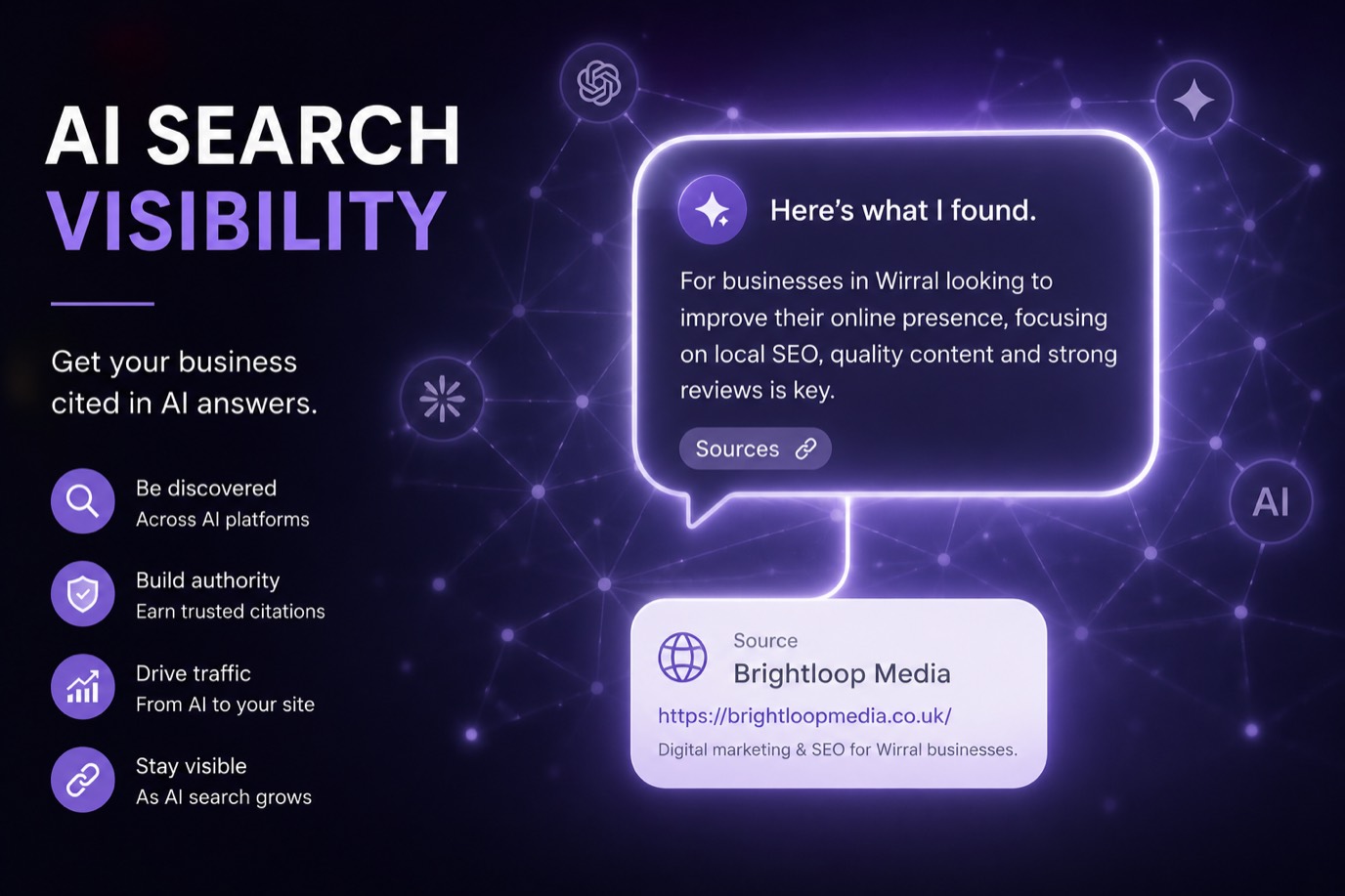
When someone uses ChatGPT, Perplexity, or Claude to ask a question about a service they need, they're not just getting an answer. They're getting a response that references sources. AI search tools are increasingly showing business names, websites, and recommendations directly in their answers. If your business isn't being cited, you're invisible to an entirely new way people are searching for services.
This isn't just about traditional Google ranking anymore. AI search is a different game with different rules. Getting your business visible in these tools requires understanding how they work and making sure you're findable through the channels they use to gather information about businesses. Most small business owners haven't even heard about this, which means there's an opportunity right now for those who move first.
How AI Search Tools Find and Cite Businesses
AI search tools don't crawl the web randomly like Google does. They use specific sources to find reliable, up-to-date information about businesses. They pull from business directories, local listing sites, review platforms, and structured data found on websites. When an AI tool answers a question about a local plumber or accountant or web designer, it's usually drawing from these curated sources rather than indexing the entire web.
The most important source for AI tools is structured business data. This is information you provide in a standard format that makes it easy for both machines and humans to understand. If your business information is incomplete, outdated, or inconsistent across different platforms, AI tools struggle to cite you reliably. They might not cite you at all.
Getting cited by AI tools starts with making sure your business is listed accurately in the places AI tools look first: Google Business Profile, industry-specific directories, and your own website's structured data. This foundational work is what GEO (Geographic Engine Optimisation) is really about.
Why Your Google Business Profile Matters More Than Ever
Your Google Business Profile is now a primary source of truth not just for Google Maps and local results, but for AI search tools. If your profile is incomplete, has wrong information, or hasn't been updated in months, you're sending a signal that your business isn't current. AI tools flag outdated information as unreliable.
A complete Google Business Profile includes your business name, address, phone number, hours of operation, categories, a description of what you do, high-quality photos, and ideally customer reviews. Many small business owners set this up once and forget it. But AI tools are checking these profiles for accuracy and freshness.
If you've moved location, changed phone numbers, expanded your services, or shifted your business focus, your Google Business Profile needs to reflect that. Regular updates tell both Google and AI tools that your business is active and trustworthy. This is something you can do yourself in minutes, and it directly affects how AI tools see you.
Getting Listed in the Right Business Directories
Beyond Google, there are industry-specific directories and general business directories that AI tools use as sources. A qualified electrician or plumber listed in trade-specific directories gets cited more reliably than one who only has a Google Business Profile. A local business listed on local business networks gets visibility to local AI queries.
The directories that matter vary by industry and location. A gym in Wirral might be listed on fitness directories, local Wirral business listings, and Merseyside tourism sites. A freelance copywriter might appear in writing and marketing professional directories. A consultant serving local businesses might be found through business networking sites.
You don't need to be listed everywhere. But you should be listed in the main directories that matter for your specific service and location. The consistency of your business information across these directories is what helps AI tools verify you're legitimate and trustworthy.
Structured Data on Your Website
Your website itself is a source. When you add structured data to your website, you're telling AI tools exactly what your business does, where you're located, what services you offer, and how to contact you. Structured data uses a standard format that machines can read and understand instantly.
Many small business websites don't have proper structured data. The information is there in human-readable format, but not in a way that AI tools can reliably extract and verify. Adding schema markup to your website (especially LocalBusiness schema if you're local, and Service or Product schema for what you offer) makes you easier to cite accurately.
This doesn't require advanced technical skills. Many website builders and CMS platforms now have tools to add structured data without coding. If your website was built by a professional, ask them to add LocalBusiness and Service schema if it's not already there.
Why Consistency Across Platforms Is Critical
AI tools don't just check one source. They cross reference. If your business name is listed as "Acme Marketing" on Google, "ACME Marketing Ltd" on one directory, and "Acme Marketing Services" on another, AI tools see conflicting information. This makes them less confident citing you, because they're not sure which version is correct.
The same applies to your address, phone number, and service descriptions. Consistency across Google Business Profile, directories, your website, and any review or social media profiles you maintain makes you easier for AI tools to cite confidently. Inconsistency creates doubt.
Before you list your business anywhere new, audit your existing listings. Make sure your name, address, and phone number match exactly across every platform. Then when you add new listings, use the same format consistently.
Getting Reviews and Building Trust Signals
AI search tools factor in whether a business has customer reviews and what those reviews say. A business with fifty five-star reviews gets cited differently than one with no reviews or mixed reviews. Reviews are a trust signal. They tell AI tools that real people have actually used this business and were satisfied.
Asking happy customers to leave reviews on Google and industry-relevant platforms builds both your local ranking power and your citation power in AI search. You don't need hundreds of reviews. Consistent, genuine reviews from actual customers signal that you're a legitimate, functioning business.
Building Visibility for AI Search Right Now
Getting cited by AI search tools is still early enough that small businesses have an advantage. Many competitors probably aren't thinking about this yet. The fundamentals are simple: ensure your Google Business Profile is complete and accurate, get listed in relevant directories, add structured data to your website, keep information consistent across platforms, and gather genuine customer reviews.
This work doesn't rank you for traditional Google search instantly, but it builds the foundation that both Google and AI tools use to understand and cite your business. As AI search grows, this foundation becomes more valuable.
Want to know if your business is properly set up for AI search visibility? Explore our complete GEO guide to understand the full picture of how both Google and AI tools discover local businesses.